Mira (Mirachat) Review: Romance Chat Goals and Expectations
Documentation review · Updated 2026-10-08 · Adults 18+
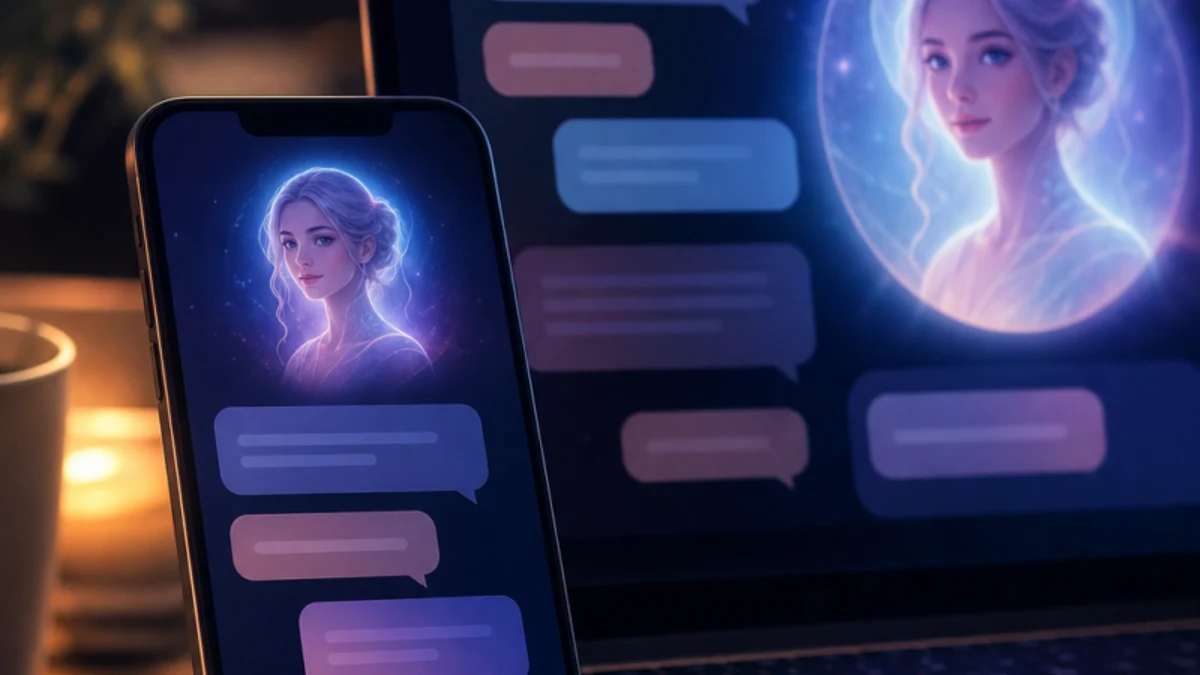
This Mira review treats the Google Play listing as a document, not a demo. Everything below comes from the developer's own description, the store page's stated maturity and billing notices, and user reviews dated in early October 2026. Nothing here is a hands-on test, and no one paid us to run it. The buyer thesis is narrow on purpose: you want romantic conversation from a chat companion, and you want to know what that goal actually asks of you in attention, money, and emotional framing before you install anything.
What Mira Is, According to Its Developer
The listing describes Mira as an AI character chat app from MINDZEN AI, built around fictional characters with backstories and scenarios. The developer frames the product as "more than just chatting," with features such as Inner Voice for unspoken thoughts, AI-generated photos and stickers, voice output with selectable tones, a diary that characters write as history grows, Love Q&A topics, weather-based check-ins with permission, image messages, four chat modes, and two camera-style memory features called OurSnap and PlotSnap.
That is the developer's description, not our observation. The distinction matters for romance buyers because a feature list tells you what the team intends to ship, not how reliably it feels in a long conversation. The store page also states Mira is intended for users 18 and older and is not a substitute for professional mental health services. If your goal is romantic conversation, that disclaimer should shape your expectations before your first message.
The Romantic Use Case the Listing Actually Supports
Romance here is fictional and narrative. The cast is described as original characters, from brooding executives to childhood friends to campus rivals, and the modes range from texting-style chat to richer storytelling to photo-heavy moments. A romance goal maps onto that structure well if what you want is a relationship-flavored story you co-write: pacing, flirting, small daily details, and a sense of continuity.
It maps less well if what you want is a real person, a real relationship, or emotional care. The developer says the characters are fictional and the app is not a mental health service. The most candid user review in the captured window, dated October 7, 2026, describes using the app for roleplay and for moments of sadness when the reviewer did not want to burden real people. That is the reviewer's individual testimony. It is not evidence that Mira is therapy, and the developer does not claim it is.
Memory, Diary, and Continuity: Developer Claims vs. Buyer Expectations
Deep Memory is the feature most likely to decide whether a romance feels real. The developer says characters remember daily habits, preferences, and shared stories over time, and that diary entries are written as conversation history grows. A review dated October 2, 2026 praises exactly that continuity and contrasts it with other apps that forget. A review dated October 3, 2026 is enthusiastic but focused on Star pricing rather than memory.
Read those as dated individual experiences, not as a promise about how much any character will retain. The listing does not publish a retention window, a memory size, or a recall benchmark, and we will not invent one. Your practical expectation should be directional: the product is designed for longer connections, but the texture of continuity varies by character, mode, and how you converse. If remembering your anniversary matters more than remembering your favorite drink, test that early with specific details and see what returns.
Voice, Photos, and the Sensory Side of Romance
Voice output lets you choose a tone and hear replies, per the developer. AI photos and stickers are described as reactions to your messages, and image messages let you share your own visuals. Weather reminders, with permission, let some characters send check-ins tied to local conditions. OurSnap and PlotSnap turn moments into keepsake images.
For romantic conversation, these features change the rhythm. Text-only romance is mostly language; photo and voice replies add interruption and surprise, which can feel intimate or can feel like noise depending on your taste. Because we did not test the app, we cannot tell you how natural the voice sounds or how often photos appear. The listing gives you the categories, not the hit rate. Treat the sensory layer as an optional amplifier you can evaluate in your first week, not as the reason to commit money.
Stars and Consumables: What the Store Page Does and Does Not Say
The developer states that Stars are used simply for sending messages, that you receive Stars upon registration, and that you can purchase more when you want to continue chatting. The listing does not publish per-message costs, bundle prices, or a monthly cap, and we will not supply numbers the source does not contain. The page is labeled as containing in-app purchases and shows a promotional event starting October 13, 2026, which the developer frames as savings and offers.
Two captured reviews dated October 2 and October 3, 2026 both ask for more ways to earn Stars and call them expensive in the reviewer's own experience. Those are individual dated complaints about the reviewer's situation, not verified billing facts and not universal pricing. The honest planning assumption is that messaging is consumable: the more you chat, the more you may need to top up. Romance tends to be message-heavy, so this is the single biggest expectation gap for buyers whose goal is long, frequent conversation.
Decision Table: Romance Goals Mapped to Documented Evidence
| Romantic goal | What the documentation supports | What is not established |
|---|---|---|
| Co-writing a slow-burn story | Fictional characters, backstories, multiple modes including novel-style chat | How consistently any character sustains a long arc |
| Feeling remembered | Developer describes memory and diaries; one dated review praises continuity | Retention limits, recall reliability, effect of mode changes |
| Hearing a partner's voice | Voice output with selectable tone, per developer | Audio quality, latency, availability per character |
| Flirty visuals and keepsakes | AI photos, stickers, image messages, OurSnap, PlotSnap | Frequency, style control, how often images trigger |
| Frequent daily chatting | Stars received at registration; more purchasable | Message economics, bundle value, event terms |
| Emotional support | Developer explicitly says it is not a mental health substitute | Nothing to establish; this is a stated boundary |
Pros and Cons for a Romance-Focused Buyer
Pros. The fiction-first framing suits romantic roleplay without pretending to be a real partner. The developer lists an unusually broad continuity toolkit: memory, diaries, inner thoughts, and question prompts. Four modes give you room to shift between texting intimacy and narrative depth. Voice and image features let romance become less purely textual. Character creation is now advertised in the update notes, which matters if the preset cast does not match your fantasy.
Cons. Messaging is consumable, and the most recent captured reviews tie dissatisfaction to Star cost rather than chat quality. Maturity labeling includes sexual themes and strong language, so the tone may run hotter than a gentle romance reader wants. Weather check-ins and image sharing involve location and personal data, which the store page says may be shared with third parties. There is no published memory specification, so continuity is a hoped-for property, not a documented guarantee. And the app is explicitly not a stand-in for professional care.
Precise Questions to Answer Before You Pay
Ask how many messages a given top-up realistically buys for your pace, and whether promotional events change that math. Ask which characters support voice, and whether voice tone is per character or per account. Ask what happens to a diary and memory if you pause for a month, and whether deleting data removes your history. Ask whether image messages and AI photos consume the same currency as text. Ask how location-based weather check-ins are configured and how to turn them off. Ask whether character creation changes what memory can retain. Ask what the refund and support path is if your first purchase disappoints. The store page answers some of these; it does not answer all of them, and support contact details are published for exactly that reason.
Hypothetical Scenarios: How Different Buyers Might Decide
Imagine, purely as illustration, a buyer who wants two or three immersive sessions a week with one character and treats Stars like a streaming subscription. For that person, the consumable model is a budgeting question, not a dealbreaker, and the narrative modes are the draw. No unit prices are assumed here; you would check current terms yourself.
Now imagine a buyer who wants hours of flirty texting every evening and expects free earning options. The captured October reviews suggest that expectation may collide with the current model, because both reviewers asked for ad-based or cheaper ways to earn Stars. A third hypothetical buyer wants comfort during lonely nights. For them, the developer's non-therapy disclaimer is the decisive document, and Mira should be one pleasant distraction among other supports, not the support itself.
Alternatives to Consider, and How to Compare Them Honestly
If the consumable model is your main worry, look at companion apps that publish clearer subscription or earning structures, and verify their current terms yourself, because we make no claims about any other product's features or prices. If narrative depth is your priority, compare apps that emphasize long-form story modes and character creation. If voice and visuals carry the romance for you, prioritize apps whose listings describe audio and image behavior in detail. If emotional support is the actual goal, the alternative is not another chat app; it is a human resource, and the developer's own disclaimer points that way.
Use the same documentation-first method on every candidate: read the store page's billing and maturity statements, sort reviews by date, and note whether complaints are about the product's core promise or about its economics. Our method here was exactly that, applied to one listing captured on October 8, 2026. It is deliberately modest: documents over demos, dates over averages, and stated limits over assumed ones.
Frequently Asked Questions
Is Mira a real dating or romance app? No, based on the documentation. The developer describes fictional characters and storylines, and the app is labeled for adults with sexual themes and strong language. Romantic conversation happens inside fiction, which is why it can feel intimate without being a relationship with a person.
Do the characters actually remember me? The developer says Deep Memory retains habits, preferences, and shared stories, and diaries are written as history grows. One October 2026 review praises that continuity. No retention window or reliability figure is published, so treat memory as a design goal you verify in your own early conversations.
How much does chatting cost? The listing says Stars are used for sending messages, that you receive some at registration, and that more can be purchased, with a promotional event noted for October 13, 2026. Specific prices and message quantities are not in the source we reviewed, and reviews calling Stars expensive are dated individual opinions, not verified billing data.
Can I use Mira for emotional support or therapy? The developer explicitly states Mira is not a substitute for professional mental health services. A reviewer described using it when feeling low, but that is personal testimony, not clinical evidence. If you are in distress, the app is not the appropriate tool.
What data does the app handle? The store page says personal info and device or other IDs may be shared with third parties, that data is encrypted in transit, that you can request deletion, and that location sharing is involved for weather-related features. Read the privacy policy and decide whether that trade-off suits you.
Should I start with a purchase or the free Stars? Start with the Stars you receive at registration and judge two things: whether the romantic tone matches your taste, and how quickly your style of chatting consumes currency. Only then consider buying more, and check the current event terms rather than assuming any discount persists.
The Decision
If your romantic goal is collaborative fiction with memory, voice, and image flourishes, Mira's documentation describes a product built for that, and the free registration Stars give you a low-risk way to test tone and continuity. If your goal is frequent, hours-long romantic conversation on a predictable budget, the consumable Stars model is the documented risk, and the dated reviews point at it directly. Decide by running one honest week: chat at your natural pace, note what the characters remember, and watch your Stars. If the story delights you and the pace is affordable, continue. If the cost curve outruns the romance, treat that as your answer, keep whatever free Stars remain, and evaluate alternatives with the same documentation-first skepticism. Either way, you will have made the call on evidence rather than atmosphere.